Who we are
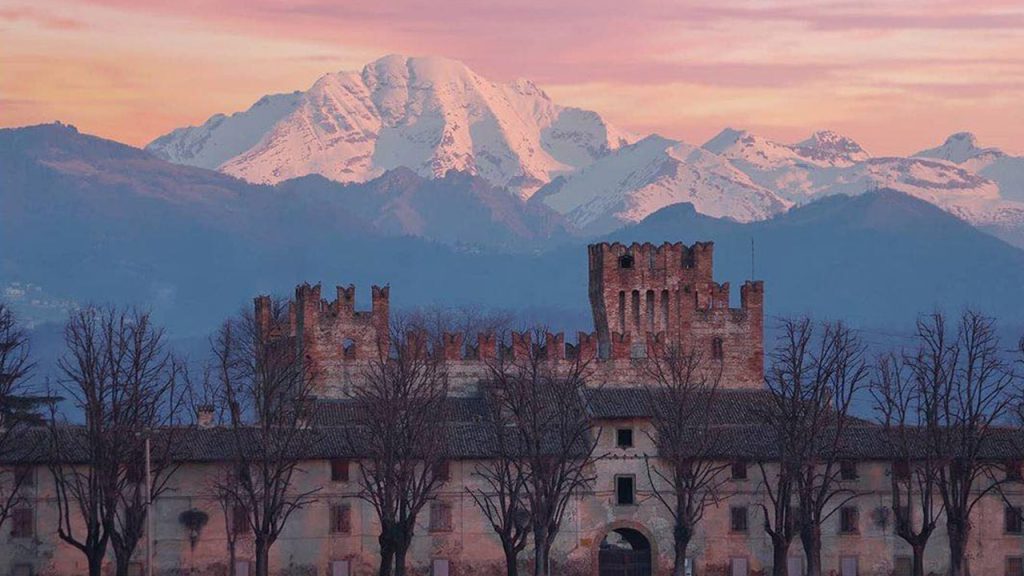
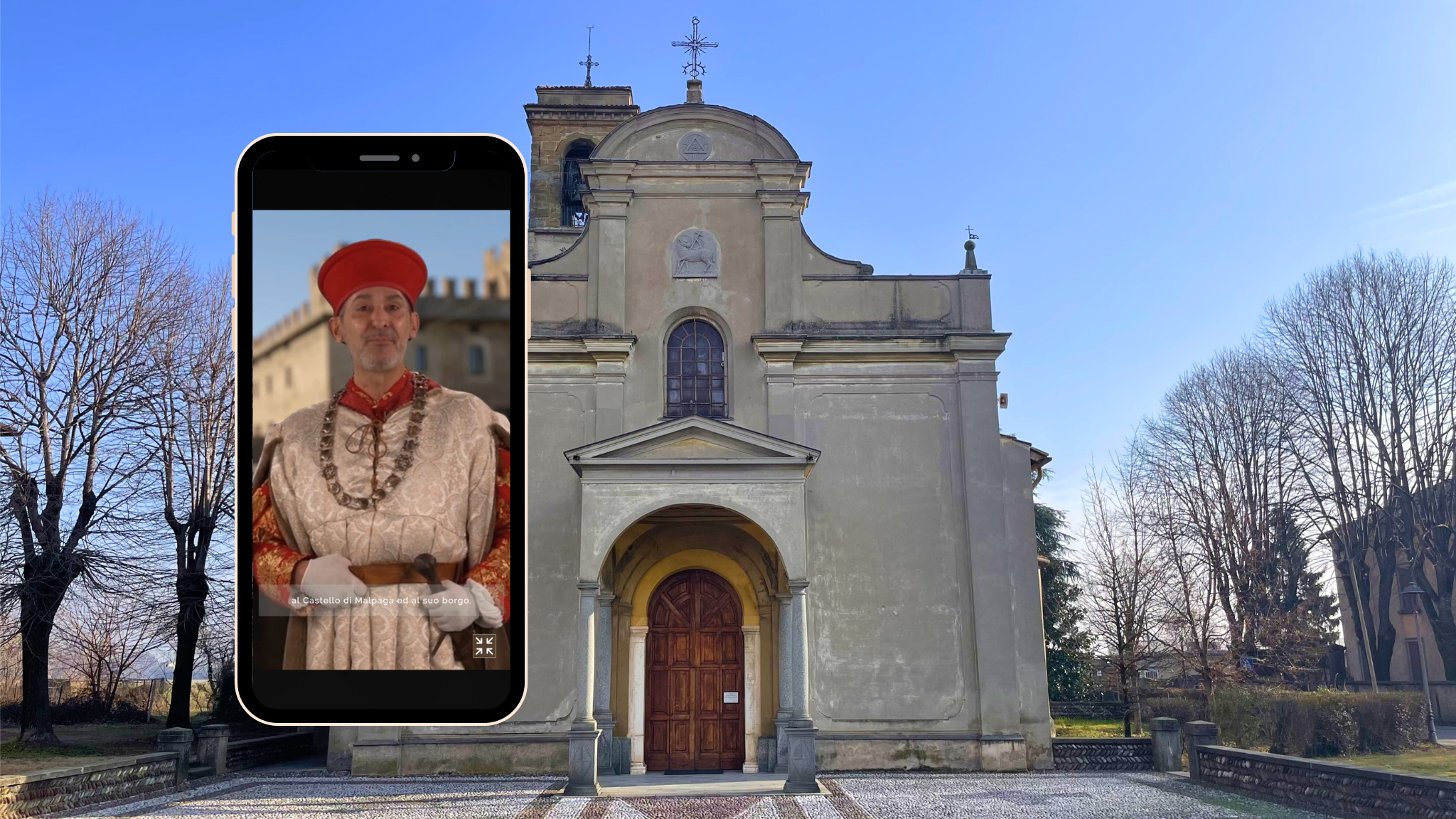
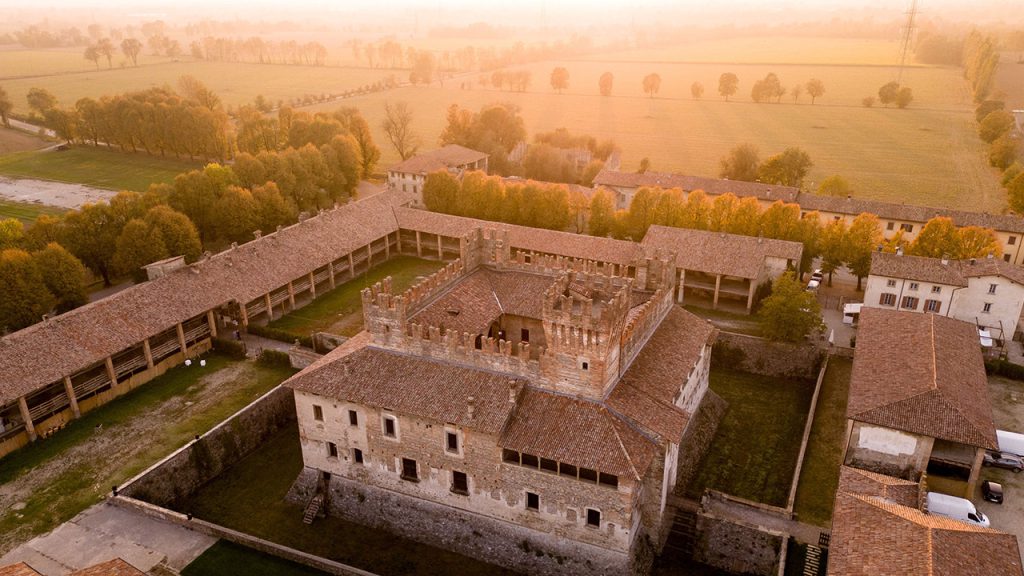
Just 15 kilometers from Bergamo and 10 from Milan Bergamo Airport, the Castle of Malpaga, with its unspoiled beauty and priceless cultural value, rises over a 300-hectare expanse of farmland within the Serio River Park.
Not far from the banks of the Serio, in the heart of the fertile plain, the Castle of Malpaga is one of Lombardy’s most characteristic buildings, both for its architectural interest and for the historical events connected to it, as well as for the echoes of ancient court life that evoke a great figure of the fifteenth century: the Bergamasque condottiero Bartolomeo Colleoni.
But its story begins much earlier.
The history of the Castle
Founded in the heart of the 14th century by a Ghibelline nobleman, the castle was later transferred to the Municipality of Bergamo.
Only several years later, on April 29, 1456, the now-famous condottiero Bartolomeo Colleoni chose it—although abandoned and in ruins—as his personal residence, purchasing it directly from the Municipality for the sum of 100 gold ducats.
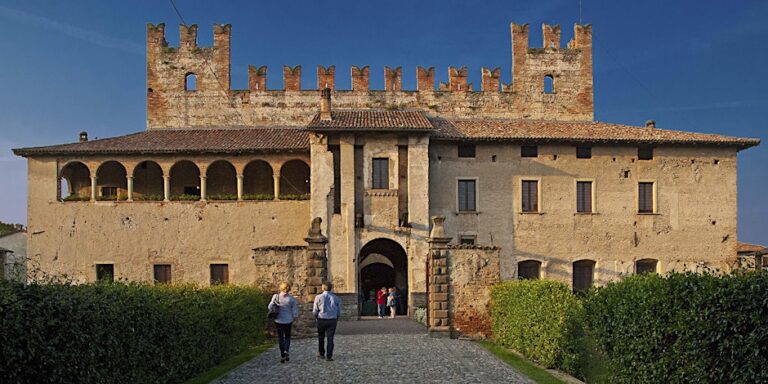
Although it was not built, like many other Italian and foreign castles, on the tops of hills and steep rocky outcrops, the fortress, with its crenellated walls and imposing tower rising to dominate the plain, is perfectly integrated into an unspoiled landscape, a jewel of creativity and hospitality.
However, with the invention of gunpowder the castle was no longer defensible. This led Colleoni to devote great effort to transforming not only the castle itself, but the entire surrounding village.
Many works were carried out under Colleoni’s direct supervision, from the raising of the walls to the construction of a new wing of rooms, as well as the building of numerous surrounding structures. The result is what we still see today: a citadel at whose center stands the “beautiful palace.”
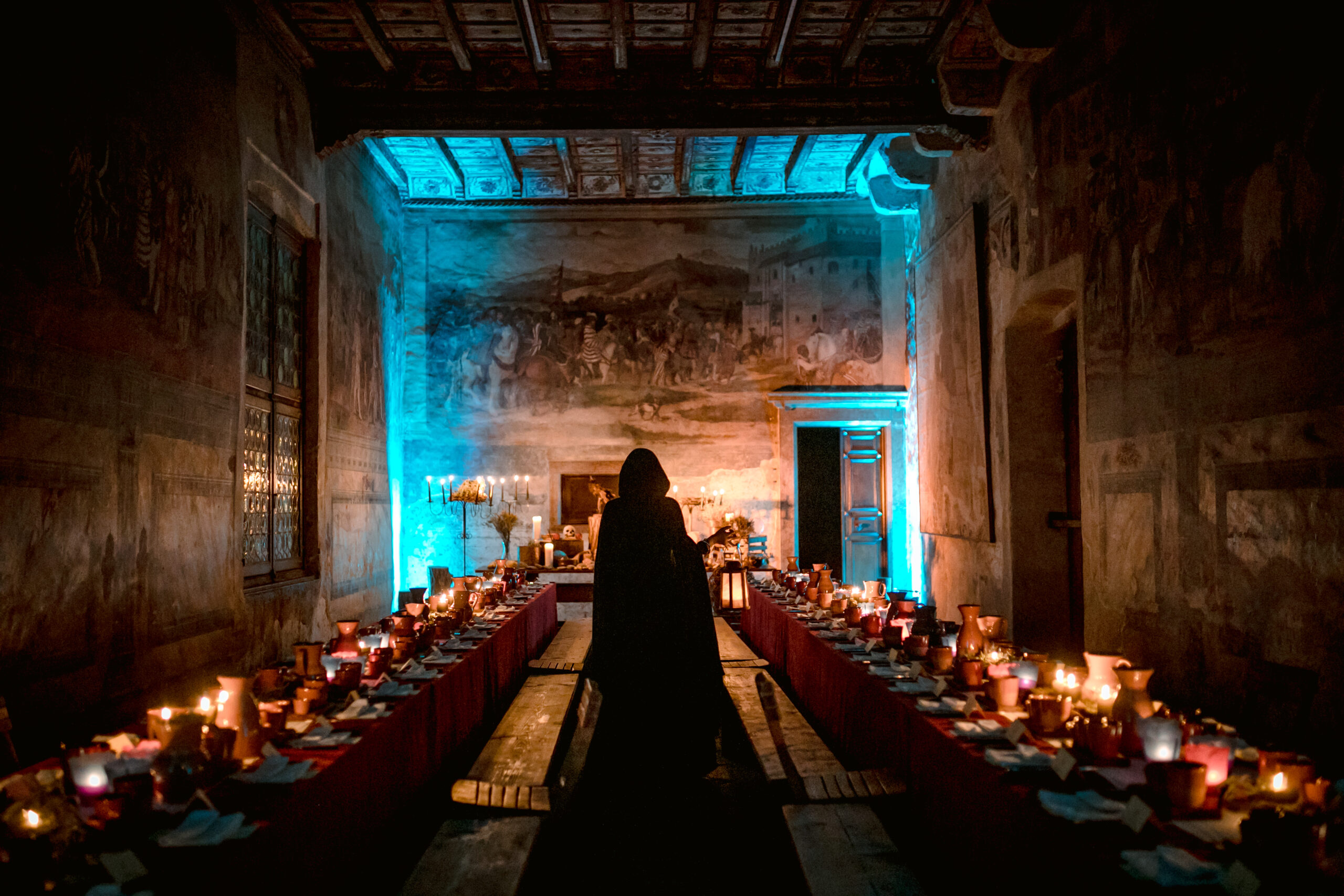
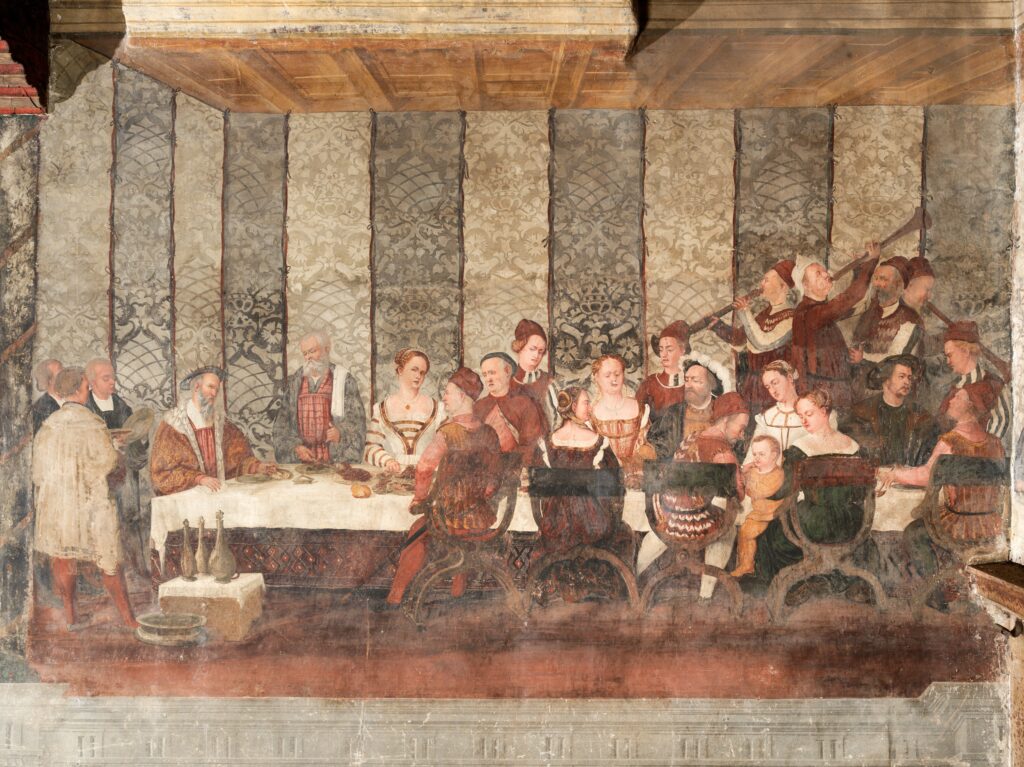
Under Colleoni’s rule, the castle became a lively center of entertainment and culture, hosting illustrious figures such as the King of Denmark. Lavish festivities, tournaments, and sumptuous banquets filled its walls, while talented artists helped turn the castle into an artistic marvel.
After Colleoni’s death in 1475, the castle passed into the hands of his heirs, the Martinengo-Colleoni family, who preserved it with care for centuries. Only in 1859 did the castle change ownership, eventually passing to the Crespi family in 1924 and finally to Malpaga SpA, which in 2010 placed it—together with the entire village—at the heart of the PeR MALPAGA territorial redevelopment project.
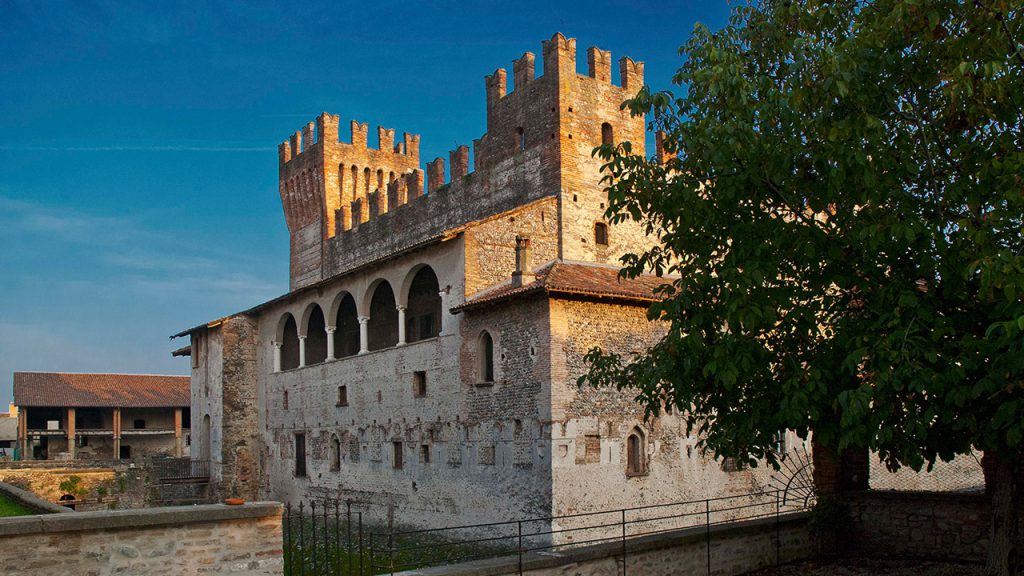
The desire to enhance this jewel of 14th-century Italy was expressed first and foremost on an architectural level, through the restoration of the existing buildings in strict accordance with philological principles, using—where possible—original period materials that have been carefully preserved over the centuries.
The restoration work was defined on the basis of careful preliminary research: important historical documents related to the Colleoni fiefdom, his life, and the customs of the time were found in various libraries and State Archives of Lombardy.
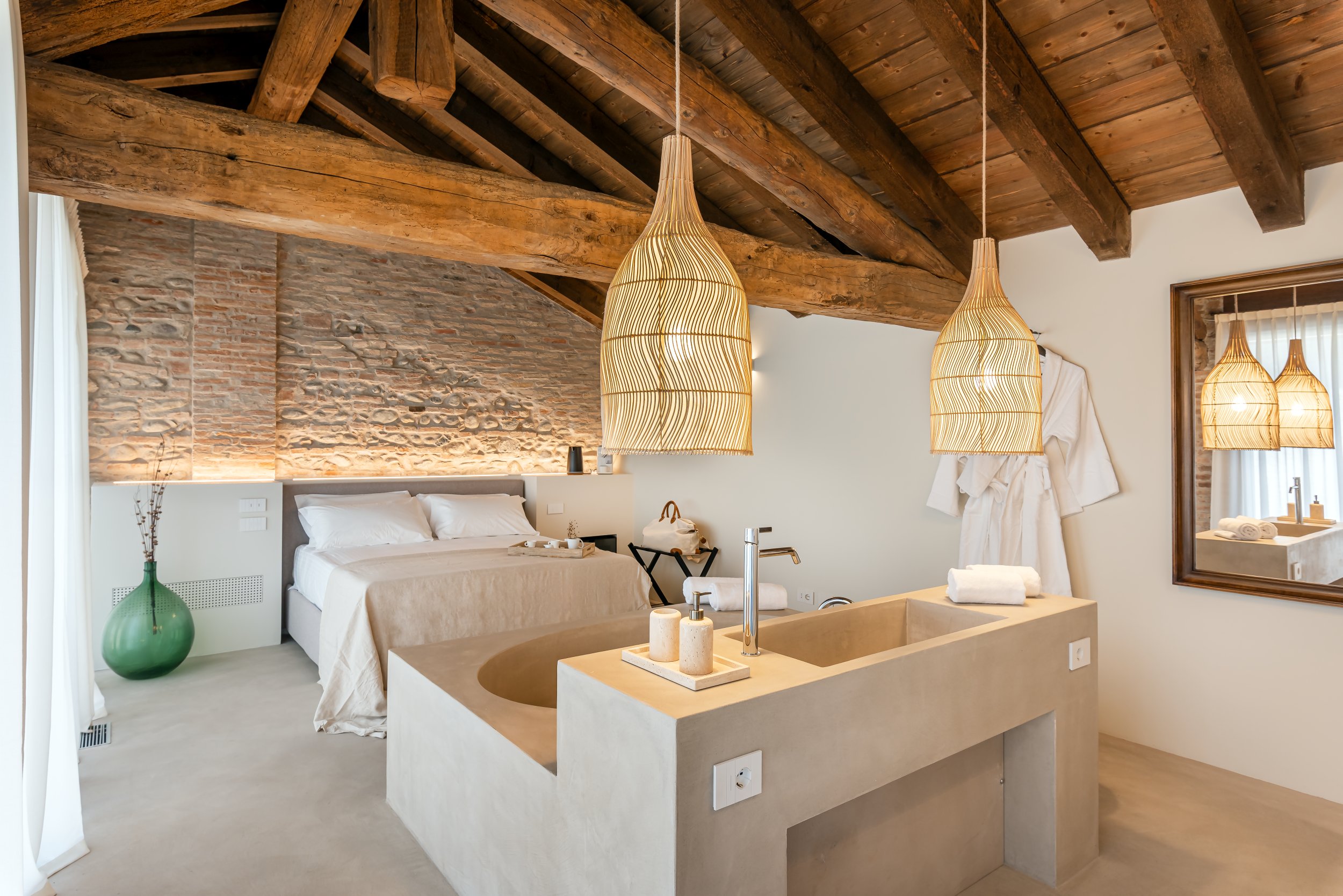
Located at the very center of the village, the Castle of Malpaga became the focal point of the entire development project that has turned it into a true tourist and cultural hub, supported by the many activities that have emerged within it in recent years. From the inn to tourist accommodations, and from immersive experiences to nature-based workshops, the castle is today a truly multidisciplinary space capable of engaging both adults and children.